Showing posts with label Technical Communication. Show all posts

Wednesday, November 2, 2016

Theories and Methods: Grounded Theory (Paper 4, ODU810, H. Gold)


Rhetoric > Technical Communication > Methodologies and Techniques > Authentic Writing > Grounded Theory
 

Conversation with Dr. Joyce Neff, PhD, Professor Emerita, ODU English Department, 01 Nov 2016.

My discussion with Dr. Joyce Neff, Professor Emerita, took an unexpected turn after 25 minutes of conversation about her publications, work with federal agencies, and expectations of a chapter publication for by Southern States Accreditation Board (Southern Association of Colleges and Schools™) focusing on Quality Enhancement Teaching (an acronym which she laughingly admitted was certainly the creation of a businessperson or a bureaucrat). The shift resulted when she asked me what my dissertation was focusing on. I fumfered a moment, and admitted that I was lost. My original plan, I explained, was to focus on reviewing pedagogy to develop, or at least present an overview of, writing programs designed for STEM students. The reasoning is that scientists, technologists, engineers, and mathematicians are not often clear communicators, but that communication is a skill required for success in academia, the nonprofit sector, and the corporate sector. But by the time I reach my comps in 2020, my concern is that teaching writing to STEM students (now STEAM, so as not ignore the arts), will have, well, lost its steam. What new value will that offer to the academy?
Me, with three of our published students.

Conversation Gone Sideways

Instead, I mentioned my plan to quantify or codify my students’ success with “Authentic Writing” teaching experience. During my past eleven years at Farmingdale State College, my teaching style helped over sixty students see their work published in paper and digital media, from The New York Times to local Anton papers, from non-profit websites to in-office kiosks. These papers have not all earned an “A”, and students’ course grades run the bell curve from “C” to “A”.  My study would try to find the common link (besides me) that urges these students on. Dr. Neff suggested that I consider the sociological methodology of ‘grounded theory.” 

The Theory

Grounded Theory is an approach for developing theory that is "grounded in data systematically
gathered and analyzed" (Strauss & Corbin, qtd by Cohen). Instead of focusing on the question or thesis, grounded theory studies all the players in an arena. In the case where undergraduate students are being published at an unusually high rate for a small major at a small school, Dr. Ness pointed out that the payers in my study could be the instructors, the students (published and unpublished), editors or those accepting student work for publication or distribution, and the audience.

Grounded Theory is also called the Constant Comparative Method, as data is continually collected and analyzed though several iterations (Glaser). It begins with a generative question designed to identify a Theoretical Sampling. The initial data collection leads to a deeper theoretical sampling process, which repeats until all reliable data is collected and analyzed.

In my case of determining the elements necessary to successfully design a standard and reliable pedagogy for teaching authentic writers to target their work for publication, I need to include three types of coding:

  1. Open coding, assigning preliminary categories to be examined, such as students who initially wanted to be published and succeeded, students who did plan on publication but were, students who desired publication but did not, and students who did not seek nor achieve publication.
  2. Axial coding, after open coding, group like categories to create new ways of examine the data.
  3. Selective coding, which finally “integrates the categories…in a way that articulates a coherent understanding or theory of the phenomenon of study” (Cohen).

I first imagined performing this study some time ago, but my small sampling of only three years’ data was insufficient to develop a clear conclusion. Now I have over a decade of data from my classes, and can move on to compare the next three year’s results with a control class run by another faculty member.  Then we may have results that can be quantified, codified, and shared as a pedagogical model foe teaching Authentic Writing to students seeking mainstream publication.


Works Cited


Cohen D, Crabtree B. "Qualitative Research Guidelines Project." July 2006. http://www.qualres.org/HomeGrou-3589.html. Retrieved 01 November 2016.
Glaser, Barney G. (1965) “The Constant Comparative Method of Qualitative Analysis.” Social Problems, Vol. 12, No. 4 (Spring, 1965), pp. 436-445. Published by: University of California Press on behalf of the Society for the Study of Social Problems. Stable URL: http://www.jstor.org/stable/798843?origin=JSTOR-pdf&seq=1#page_scan_tab_contents
Ness, Joyce (Professor Emerita, ODU English Department) in discussion with the author, October 2016.
Strauss, A. & Corbin, J. (1994). "Grounded Theory Methodology." In NK Denzin & YS Lincoln (Eds.) Handbook of Qualitative Research (pp. 217-285). Thousand Oaks, Sage Publications.

Wednesday, October 26, 2016

Annotated Bibliography, Theories and Methods (PAB4a, ODU810, H. Gold)


Rhetoric > Technical Communication > Theories and Methods >nAuthentic Writing

Annotated Bibliography of:

Dawson, Christine M. "Beyond Checklists and Rubrics: Engaging Students in Authentic Conversations about their Writing." English Journal, vol. 98, no. 5, 2009., pp. 66-71.

Authentic conversations

Be AuthenticMy goal, like that expressed by Dawson, “is to develop [students to] talk about writing, [so] I try to get students to read excerpts of their writing aloud as soon as possible. I want them to practice listening to the sounds of their own words, as well as the words of their peers.” This goes beyond responding with written notes. He writes about his struggle as a writer compared to how his students, new to writing, deal with the entire writing process. This is what I refer to as the technical communication procedure, from having an idea (either assigned or coming alive in its eureka-moment), to coming up with initial research questions, to the first round of fact-gathering, to refining (or redefining) those questions, to gathering more and more informative facts, and on to the first, second, and third draft, then to new questions and reiterative research. To help his students navigate that process, Dawson has students trade their written work for peer-review, despite recognized uneven results. Even Dawson sees that some students give their peers deep document analysis while others just write “Good Job,” providing no useful feedback.  

He admits that it is difficult for any writer, from novice through professional, to receive a “checklist about … writing” in early stages of the writing process. That is why he works to give writing students the authentic discussions which, he also contends, are “not the norm in secondary English classrooms (Nystrand).” Dawson believes high school and college composition teachers rely on simple “recitation practices,” instead of taking the time to help students build skills of critical analysis, editing, provide lessons on how to listen to and accept feedback.

Authentic discussion

He shows that authentic discussion forces students to apply critical thinking and problem-solving skills. Students with an open mind think outside the box, as it were. Furthermore, it encourages “students and teachers [to] collaboratively delve into complex ideas, building on each other's contributions as they explore real-life problems and processes (Hillocks; McCann et al.; Nystrand; Wilhelm).” 
  
An experienced secondary school English teacher, Dawson sees the positive results of using student peer-reviews. More importantly, he recognizes the important and added positive impact that the authentic discussions provide when students read their writing aloud and openly listen to class commentary.

Authentic writing

Technical communication relies on practitioners first learning the value of authentic writing. We can capture students’ imagination if we allow them to freely and openly offer opinions in authentic conversations about their peer’s writing. This opens the student-writer to learning how to give positive and gently productive (otherwise seen as negative) suggestions, how to listen and react to peer feedback (both positive and what is perceived as negative), and how to apply those comments.
Authentic writingDawson concludes that “making authentic writing discussions an instructional priority engaging in authentic writing discussions helps students develop writing practices that extend beyond an individual piece of writing.” Students who master authentic discussion will be effective professional technical communicators who are able to open valuable exchanges of information in the workplace.


References

Works Cited

Hillocks, George, Jr. Teaching Writing as Reflective Practice. New York: Teachers College, 1995.
McCann, Thomas M., et al. Talking in Class: Using Discussion to Enhance Teaching and Learning. Urbana: NCTE, 2006.
Nystrand, Martin. Opening Dialogue: Understanding the Dynamics of Language and Learning in the English Classroom. New York: Teachers College, 1997.
Virginia Commonwealth University. Teaching, learning & technology in Higher Education. authenticassessment.gif. http://wp.vcu.edu/grad602/course-materials/s-13/resources-session-13/, 2013.
 Wilhelm, Jeffrey D. Engaging Readers and Writers with Inquiry: Promoting Deep Understandings in Language Arts and the Content Areas with Guiding Questions. New York: Scholastic, 2007.

Links

Frawley, Chris. (10 May 2010).providing Feedback with written commentss improves student learning skills.Virginia Department of Education’s Training & Technical Assistance Center

Wisconsin Department of Public Instruction. Wisconsin’s Guiding Principles for Teaching and Learning:  Guiding principle 4: Learning is a collaborative responsibility. http://dpi.wi.gov/sites/default/files/imce/cal/pdf/guiding-principles4.pdf


Tuesday, October 11, 2016

Annotated Bibliography, Epistemological Alignment (PAB3b, ODU810, H. Gold)


Rhetoric > Technical Communication
Annotated Bibliography of:
Price, Tiffany E., and Chambers, Mary-Lynn. "Globalization and the Cultural Impact on Technical Communication." European Scientific Journal (2016): 93+. Academic OneFile. Web. 11 Oct. 2016.

This week’s second annotated bibliography on epistemological alignment looks at the 2016 article by Tiffany Price and Mary-Lynn Chamber, “Globalization and the Cultural Impact on Technical Communication." They open the essay by saying that, “Technology has thrown open the academic doors to new learning strategies that will positively impact the global communication experience.” In an era of increasing dystopian writing (fiction and non-fiction), I find this refreshing view placing our technical communication discipline as a force performing worldwide good.

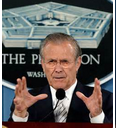
Neuro Linguistic Programming (NLP) defines epistemology as a science identifying the learner’s perspective of what they know, how they know it, why they know it, and if they care why they have the knowledge (Kong). As an aside, NLP is also a growing commercial market serving corporate training needs (Vansson). To simplify the issue of NLP for most non-academics, then-Secretary of State Donald Rumsfeld summed it up best (Graham):
Buy the book
Donald Rumsfeld's book
As we know, there are known knowns; there are things we know we know. We also know there are known unknowns; that is to say we know there are some things we do not know. But there are also unknown unknowns—the ones we don’t know we don’t know. 
This brings us to our two epistemological issues: (1) teaching technical communicators to effectively work and to train new global communicators, and (2) fulfill international learners’ gaps in knowledge.

Global Competence

Measuring the ability for intercultural instructors and students to communicate has been defined by Han Yu as the ability for each to:
Buy Hu's Book
Hu's Book
·         communicate effectively and appropriately in across cultures based on one’s intercultural knowledge, silks, and attitudes;
·         suitably shift point of view and adapt to cultural context;
·         identify mannerisms guided by culture, then engage in new, unfamiliar behaviors from other cultures.

Multilayered Literacies

Kelli Cargile Cook (whose paper I annotated in PAB3) acknowledges the urgency of making technical communication “multilayered, possessing a variety of literacies that encompass the multiple ways people use language in producing information, solving problems, and critiquing practice.” Towards that end, she offers “six layered literacies” for technical communicators (Cook):
1.      Basic literacy is the ability to read and write, and now extends to business writing and “codified skills and forms.”
2.      Rhetorical literacy is audience-facing needs; analytical skills to respond to the audience through specific communication purpose; choosing applicable strategies based on audience, purpose, and writing; and an awareness of your cultural point of view and that of the audience.
3.      Social literacy is used to reach learners in a classroom or workplace practice environment.
4.      Technological literacy is a newcomer to the pedagogy, but includes knowledge of technology to produce content; awareness of how to use technology for collaboration; research using technologies; and to critique, make decisions, and produce audience-facing content
5.      Ethical literacy combines the “communicators’ knowledge of professional ethical standards [and] their abilities for all stakeholders…”
6.      Critical Literacy is an “isolated” literacy, “deeply embedded in situations requiring other forms of literacy.” It promotes reflection, critique, and action.

Next Steps

Global and cultural implications of creating online content, as separately defined by Kong and Han, can be applied to Cook's literacies for preparing new curricula to clearly teach the discipline to new technical communicators. As described in PAB3a, this may further help me identify and perhaps contribute to a growing integrative pedagogical frame for technical communication.

Works Cited

Cook, Kelli Cargile. "Layered Literacies: A Theoretical Frame for Technical Communication Pedagogy." Technical Communication Quarterly 11.1 (2002): 5-29. OmniFile Full Text Mega (H.W. Wilson). Web. 10 Oct. 2016.
Graham, David A. (27 Mar 2014). "Rumsfeld's Knowns and Unknowns: The Intellectual History of a Quip." The Atlantic. http://www.theatlantic.com/politics/archive/2014/03/rumsfelds-knowns-and-unknowns-the-intellectual-history-of-a-quip/359719/ (11 Oct 2016)
Kong, Eric. "The Potential of Neuro-Linguistic Programming In Human Capital Development." Electronic Journal of Knowledge Management 10.2 (2012): 131-141. Library, Information Science & Technology Abstracts with Full Text. Web. (11 Oct. 2016).
Price, Tiffany E., and Chambers, Mary-Lynn. "Globalization and the Cultural Impact on Technical Communication." European Scientific Journal (2016): 93+. Academic OneFile. Web. 11 Oct. 2016. http://www.eujournal.org/index.php/esj/article/view/7669/7409
Yu, Han. "Intercultural Competence in Technical Communication: A Working Definition and Review Of Assessment Methods." Technical Communication Quarterly 21.2 (2012): 168-186. Education Source. Web. (11 Oct. 2016).
Vanson, Sally. (22 Aug 2014). "What on earth are Ontology and Epistemology?" The Performance Solution. http://theperformancesolution.com/earth-ontology-epistemology/ (11 Oct 2016)