Showing posts with label Culture. Show all posts

Thursday, March 30, 2017

Grad and Author returns to Address Students


Prof Gold and George Resch at FSC
Farmingdale State College (FSC) alum and author George Resch (’05) recently spoke with the Professional Communication Majors Honor Society, Lambda Pi Eta. He stressed the importance of the Professional Communications degree from FSC, discussed his growing popularity as an Instagram celebrity (@tank.sinatra), and acknowledged how that informed his decision to publish his first self-help book, Happy is the New Rich. He also explained the painstaking process of writing a book. Resch offered valuable advice about the importance of trying, failing, and trying again. After taking questions, the Farmingdale-graduate read some of his favorite quotes from Happy is the New Rich. George was recently interviewed as an expert on social media by the ABC Newsmagazine Nightline. You can follow him on Instagram (@tank.sinatra) while waiting for his book, which should soon be available on Amazon.com!

Tuesday, October 11, 2016

Annotated Bibliography, Epistemological Alignment (PAB3b, ODU810, H. Gold)


Rhetoric > Technical Communication
Annotated Bibliography of:
Price, Tiffany E., and Chambers, Mary-Lynn. "Globalization and the Cultural Impact on Technical Communication." European Scientific Journal (2016): 93+. Academic OneFile. Web. 11 Oct. 2016.

This week’s second annotated bibliography on epistemological alignment looks at the 2016 article by Tiffany Price and Mary-Lynn Chamber, “Globalization and the Cultural Impact on Technical Communication." They open the essay by saying that, “Technology has thrown open the academic doors to new learning strategies that will positively impact the global communication experience.” In an era of increasing dystopian writing (fiction and non-fiction), I find this refreshing view placing our technical communication discipline as a force performing worldwide good.

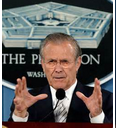
Neuro Linguistic Programming (NLP) defines epistemology as a science identifying the learner’s perspective of what they know, how they know it, why they know it, and if they care why they have the knowledge (Kong). As an aside, NLP is also a growing commercial market serving corporate training needs (Vansson). To simplify the issue of NLP for most non-academics, then-Secretary of State Donald Rumsfeld summed it up best (Graham):
Buy the book
Donald Rumsfeld's book
As we know, there are known knowns; there are things we know we know. We also know there are known unknowns; that is to say we know there are some things we do not know. But there are also unknown unknowns—the ones we don’t know we don’t know. 
This brings us to our two epistemological issues: (1) teaching technical communicators to effectively work and to train new global communicators, and (2) fulfill international learners’ gaps in knowledge.

Global Competence

Measuring the ability for intercultural instructors and students to communicate has been defined by Han Yu as the ability for each to:
Buy Hu's Book
Hu's Book
·         communicate effectively and appropriately in across cultures based on one’s intercultural knowledge, silks, and attitudes;
·         suitably shift point of view and adapt to cultural context;
·         identify mannerisms guided by culture, then engage in new, unfamiliar behaviors from other cultures.

Multilayered Literacies

Kelli Cargile Cook (whose paper I annotated in PAB3) acknowledges the urgency of making technical communication “multilayered, possessing a variety of literacies that encompass the multiple ways people use language in producing information, solving problems, and critiquing practice.” Towards that end, she offers “six layered literacies” for technical communicators (Cook):
1.      Basic literacy is the ability to read and write, and now extends to business writing and “codified skills and forms.”
2.      Rhetorical literacy is audience-facing needs; analytical skills to respond to the audience through specific communication purpose; choosing applicable strategies based on audience, purpose, and writing; and an awareness of your cultural point of view and that of the audience.
3.      Social literacy is used to reach learners in a classroom or workplace practice environment.
4.      Technological literacy is a newcomer to the pedagogy, but includes knowledge of technology to produce content; awareness of how to use technology for collaboration; research using technologies; and to critique, make decisions, and produce audience-facing content
5.      Ethical literacy combines the “communicators’ knowledge of professional ethical standards [and] their abilities for all stakeholders…”
6.      Critical Literacy is an “isolated” literacy, “deeply embedded in situations requiring other forms of literacy.” It promotes reflection, critique, and action.

Next Steps

Global and cultural implications of creating online content, as separately defined by Kong and Han, can be applied to Cook's literacies for preparing new curricula to clearly teach the discipline to new technical communicators. As described in PAB3a, this may further help me identify and perhaps contribute to a growing integrative pedagogical frame for technical communication.

Works Cited

Cook, Kelli Cargile. "Layered Literacies: A Theoretical Frame for Technical Communication Pedagogy." Technical Communication Quarterly 11.1 (2002): 5-29. OmniFile Full Text Mega (H.W. Wilson). Web. 10 Oct. 2016.
Graham, David A. (27 Mar 2014). "Rumsfeld's Knowns and Unknowns: The Intellectual History of a Quip." The Atlantic. http://www.theatlantic.com/politics/archive/2014/03/rumsfelds-knowns-and-unknowns-the-intellectual-history-of-a-quip/359719/ (11 Oct 2016)
Kong, Eric. "The Potential of Neuro-Linguistic Programming In Human Capital Development." Electronic Journal of Knowledge Management 10.2 (2012): 131-141. Library, Information Science & Technology Abstracts with Full Text. Web. (11 Oct. 2016).
Price, Tiffany E., and Chambers, Mary-Lynn. "Globalization and the Cultural Impact on Technical Communication." European Scientific Journal (2016): 93+. Academic OneFile. Web. 11 Oct. 2016. http://www.eujournal.org/index.php/esj/article/view/7669/7409
Yu, Han. "Intercultural Competence in Technical Communication: A Working Definition and Review Of Assessment Methods." Technical Communication Quarterly 21.2 (2012): 168-186. Education Source. Web. (11 Oct. 2016).
Vanson, Sally. (22 Aug 2014). "What on earth are Ontology and Epistemology?" The Performance Solution. http://theperformancesolution.com/earth-ontology-epistemology/ (11 Oct 2016)

Thursday, September 29, 2016

Profanity: Crossing Borderzones of Literacy (PAB2b, Technical Communications and Digital Rhetoric: Major Questions, ODU EGL 810)


Annotated Bibliography:


Jay, Timoty and Janschewitz, Kristin. “The pragmatics of swearing.” Journal of Politeness Research. Language, Behaviour, Culture. Volume 4, Issue 2, Pages 267–288. 2008 August. Accessed 2016 September 28. DOI: 10.1515/JPLR.2008.013
Also see:

Jay, Timothy1, and Kristin Janschewitz. "Filling The Emotion Gap In Linguistic Theory:  Commentary On Potts' Expressive Dimension." Theoretical Linguistics 33.2 (2007): 215-221. Humanities Source. Web. 29 Sept. 2016.

Introduction

The Skerrett and Bomer article spoke of how students self-emerge in “unofficial worlds” and that out-of-school literacies cross personal “borderzones” spanning each of our life experiences regardless of “age, gender, [or] status” (Skerret 1257). They quote Renato Rosaldo about “disparate worlds […over] a range of relationships, from intimacy to collegiality and friendship to enmity” (Sekerrett 1257). That reminded me of reading I came across over the summer about the dissonance of communications, the wedge of intentional sarcasm, and a loss of civility across the media.  P.M. Forni, a professor of Italian and literature at John Hopkins, set aside a complete chapter to civility in our culture include (qtd by Watson):

  • The obvious talking too loudly
  • Holding inappropriate conversations in public
  • Discriminating in an employment situation
  • Rudely interrupting conversations
  • Texting while driving
  • Disturbing live performances
  • Treating service providers as inferiors
  • Failing to say please or thank you
  • Checking your cell phone during live performances
  • Using technology in public
  • Using foul language in public

Here I consider the last of these offenses to social, cultural, and rhetorical civil discourse: foul language.  In their article, “The pragmatics of swearing,” Jay and Janschewitz offer statistical research showing that, for college aged respondents, accepting profanity should be “variable, dependent on speaker-listener relationship, social-physical context, [gender,] and particular word used.”

Leaders Leading with Profanity
http://time.com/4502332/rodrigo-duterte-eu-profanity-philippines-drugs/
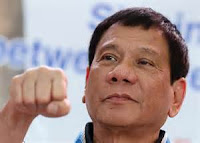
Philippine President Duterte

The uncivil tongue of public insult has been a political staple globally in the early 21st century, reaching a crescendo in the 2016 presidential contest. Donald Trump kicked off his candidacy in June  of 2015 with invective aimed at fellow Republicans; since then he has tweeted “insults at presidential candidates, journalists, news organizations, nations, a Neil Young song and even a lectern in the Oval Office” (Lee).[1] Meanwhile, in the Philippines, newly-elected President Rodrigo Duterte shows that the strikingly candid and aggressive tone of politics is worldwide. In the past few months, Philippines he openly announced that he doesn’t “care about human rights.” He has given EU leaders the finger, called President Obama a “son-of-a-whore,” labeled U.S. Secretary of State John Kerry as “crazy,” blocked completion of a U.S.-China treaty (by offending China), and amped up a “war on drugs” at home in which his forces have killed more than 3,500 suspected drug dealers (all without due process). In open press conferences, he greets critics with a simple and succinct “F-ck you” (Time).
https://www.amazon.com/Etiquette-Emily-Post-ebook/dp/B0082PYQJQ/ref=sr_1_2?s=books&ie=UTF8&qid=1475145401&sr=1-2&keywords=emily+post+book+of+etiquette
Emily Post Weeps
A few short years ago, when the Jay and Janschewitz study was completed, they believed that we can learn “when, and with whom swearing is appropriate.” That borderzone is wall that—like the Berlin Wall—has been torn down. Ironically, while a leading political candidate for the U.S. presidency proposes building of  physical walls, Mr. Trump has been most effective in tearing down the social, cultural, and rhetorical walls of civil discourse.


Bibliography


Lee, Jasmine, and Quealy, Kevin. “The 258 People, Places and Things Donald Trump Has Insulted on Twitter: A Complete List.” The New York Times: The Upshot. 2016 August 22. Accessed 2016 September 24. http://www.nytimes.com/interactive/2016/01/28/upshot/donald-trump-twitter-insults.html?_r=0


Jay, Timothy1, and Kristin Janschewitz. "Filling The Emotion Gap In Linguistic Theory:  Commentary On Potts' Expressive Dimension." Theoretical Linguistics 33.2 (2007): 215-221. Humanities Source. Web. 29 Sept. 2016.

Jay, Timoty and Janschewitz, Kristin. “The pragmatics of swearing.” Journal of Politeness Research. Language, Behaviour, Culture. Volume 4, Issue 2, Pages 267–288. 2008 August. Accessed 2016 September 28. DOI: 10.1515/JPLR.2008.013
Korhonen, T. (2012). Toward a rhetoric of insult. Rhetorica, 30 (3), 334-337,340. Retrieved from http://hs1.farmingdale.edu:2177/docview/1034609609?accountid=8066
Skerrett, Allison and Bomer, Randy. “Borderzones in Adolescents’ Literacy Practices: Connecting Out-of-School Literacies to the Reading Curriculum.” Urban Education. 2011 March 10. Accessed 2016 September 24. DOI: 10.1177/0042085911398920. http://uex.sagepub.com/content/46/6/1256
Time Staff. “Philippine President Rodrigo Duterte Launches Profanity-Laden Tirade at the E.U.” Time Magazine. 2016 September 21. Accessed 2016 September 28. http://time.com/4502332/rodrigo-duterte-eu-profanity-philippines-drugs/
Watson, Elwood. “Are Civility and Good Manners Waning?” Diverse Issues in Higher Eduction, 2014 October 28. Accessed 2016 September 24. http://diverseeducation.com/article/67631/

 Footnote


[1] While considering politically-charged rhetoric, Conley gives us a reason for Aphasia being overlooked by history when Conley discusses Cicero “as a master of invective” (Korhonen 334).