Sunday, September 18, 2016

Brief History of Digital Documentation, 1945 - 2016 (version 1)


By Howard Gold, PhD student, English Department, Old Dominion University.
re-posted September 22, 2016
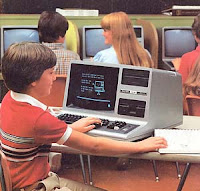
"Trash" 80
Radio Shack TRS "Trash" 80 Model III in school
Writers of every ilk are indebted to mathematicians and engineers who built early information-storage and retrieval systems during the mid-twentieth century. Without those, the age of personal computing and word processing could not have exploded in the 1980s. The pervasive use and ease of digital documentation quickly replaced traditional typewriters, expanding storytelling, documented teachers’ notes, encouraging a global sharing of academic findings and more, from the highest levels of academia and government to neighborhood schools and kitchen tables. This occurred during a quick evolution of word-processor-centric computers available at retail stores, such as Radio Shack’s popular TRS-80, the WANG VS series, Commodore’s 64, leading up to the early IBM Personal Computer (“PC”) and Apple’s first MAC, all using software from WordStar to WordPerfect to Microsoft Word. “These instances are also contextualized as signifiers of the culture’s general adoption of personal computers in writing and the office environ” (Lambertson). Of course, we know this now. But how did we get here? When did digital documentation begin, and how did it become a mainstay of our culture? This essay is a brief statement of key issues for consideration.

Technically speaking…

From a technical view, we start at 1940s Princeton with John von Neumann's first data-storing computer (Atomic Archive). That led to his work (with fellow mathematicians and
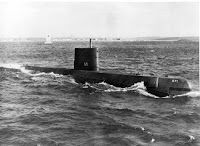
USS Nautilus
USS Nautilus at sea
engineers) on the USS Nautilus, launched on January 21, 1954, which did not set sail September 30, 1954 (Submarine Force Museum). Anecdotal reports contend that the delay was caused by–among other reasons–documentation and a simple matter of physics. The documentation for everything from repairing stoves to launching nuclear missiles was reportedly heavier and of more volume than the ship itself. All the manuals needed to be digitized and capable of storing “programming information” with easy-to-read “data” as text. Previously, only numerical data for computation was stored, making this copying of files to microfiche or computer tape for storage and retrieval on board a military vessel ground-breaking.
Philosophically speaking…

In “Orality and Literacy" (1982), Walter J. Ong states that writing is a technology, but “Technologies are artificial—paradox again—artificiality is natural to human beings. Technology, [properly interiorized, does not degrade human life but on the contrary enhances it” (Ong). In the same text, he points out that consciousness of ideas cannot be fully realized without writing. The interaction of speech, “orality”, is something that we are born with, while writing is a learned activity. Writing is an extension of orality, and is therefore “consciousness-raising.” Over thirty years ago, Ong stated that electronically or digitally produced text could replace books or newspapers, and foresaw a growth of what we now call eBooks and audio texts (Ong).

Modernist view…

So, where did we writers and students get the big idea that we can adopt technology created by mathematicians and the Department of Defense and for our tasks? Before migrating to digitized text, writers’ thoughts and even the thinking process—the order of prioritizing thoughts, documenting
Anne Rice books on Amazon
them, creating new ideas, purging unworkable ones—was already underway before 1900 when
Nietzsche typed the phrase, “Our writing instruments are also working on our thoughts (Kirschenbaum). Anne Rice, who came of age in the computer era reveals that, despite writing in different genres, their thinking changed by using computers to write. Anne Rice admits, “Once you really get used to a computer and you get used to entering the information from that keyboard, things happen in your mind, I mean, you change as a writer. You’re able to do things that maybe you never would have thought of doing before.”
We creators of digital documentation, from poets to tech writers, are faced with two roles: author and reader. As authors, it is easy to let the words come out of our brains, through our fingers, across the keyboard, and onto the screen in various levels of awareness. But care must be taken, as each digital writer is also a member of their own audience. The writer can often see the working version of a draft in the same format as the audience, removing the middle-steps of production and publication. Jerome McGann’s contends that perceiving text today requires  “emulate[ing] the humanists of the fifteenth century who were confronted with a similar upheaval of their materials, means, and modes of Knowledge production” (qtd. by O'Sullivan). This new digital literacy requires new skills for authors and readers alike, bringing new phrases of like transliteracy, metaliteracy and multimodal literacy to the forefront (Stordy).

References


Jabr, Ferris. "The Reading Brain in the Digital Age: The Science of Paper versus Screens." Scientific American 11 Apr 2013. 18 Sep 2016. <http://www.scientificamerican.com/article/reading-paper-screens/>.
Kirschenbaum, Matthew. "Technology changes how authors write, but the big impact isn’t on their style." 26 Jul 2016. The Conversation. 19 Sep 2016. https://theconversation.com/technology-changes-how-authors-write-but-the-big-impact-isnt-on-their-style-61955.
Lambertson, Jessa A. "Track Changes: A Literary History of Word Processing." Library Journal (2016): 91. 18 Sep 2016. 
National Science Digital Library. "John von Neumann (1903 - 1957)." 2015. Atomic Archive. AJ Software & Multimedia, National Science Foundation Grant 0434253 . 21 Sep 2016. <http://www.atomicarchive.com/Bios/vonNeumann.shtml>.
Ong, Walter J. Orality and Literacy. New York: Routledge, 1982, 2002. 18 Sep 2016.
O'Sullivan, James. "The New Apparatus of Influence: Material Modernism in the Digital Age." International Journal of Humanities and Arts Computing 8.2 (2014): 226-238. 20 Sep 2016. www.euppublishing.com/ijhac.
Stordy, Peter Howard. "Taxonomy Of Literacies." Journal of Documentation 71.3 (2015): 456-476. Applied Science & Technology Source. Web. 22 Sept. 2016.
Submarine Force Museum. Submarine Force Museum, Home of the Historic Ship NAUTILUS. 2013. 18 Sep 2016. <http://www.submarinemuseum.org/nautilus/index.shtml>.


Wednesday, September 14, 2016

ODU ENGL 810 PAB 2 TOPIC: New Media and Rhetoric by Discussing Media and Pedagogy


TOPIC:           Annoted Bibliography, PAB1, 2 of 2New Media and Rhetoric by Discussing Media and Pedagogy (2 of 2)

Guasch, Teresa, and Espasa, Anna. "Collaborative Writing Online: Unraveling the Feedback Process." Deane, Mary and Guasch, Teresa. Learning and teaching Online. 13-30: Brill, 2015
Keywords: Communications and Information Technology, C&IT, computer-mediated communication, CMC, new media, enhanced learning, social organization, learning orientation, work modality, emotional climate, group response, gamification of learning


Bibliography

Denning, Mike, and Davis, Kate. "Almost as helpful as good theory: some conceptual possibilities for the online classroom." Research in Learning Technology 9.2 (2001): 64-75.
Guasch, Teresa, and Espasa, Anna. "Collaborative Writing Online: Unraveling the Feedback Process." Deane, Mary and Guasch, Teresa. Learning and teaching Online. 13-30: Brill, 2015.
Ivory, James. Virtual Lives: A Reference Handbook. ABC-CLIO, 2012.
Murray, Janet H. Hanmlet on the Holodeck. New York: Simon & Schuster, 1997.
Stefan, Livia and Moldoveanu, Florica. "Gamified 3D virtual learning environment for improved students’ motivation and learning evaluation. A case study on “3DUPB” campus." The 11th International Scientific Conference eLearning and software for Education. 2015. 94-102. Bucharest.

Annotations

“All media as extensions of ourselves serve to provide new
transforming vision and awareness.”
Marshall McLuhan (qtd from Murray)
Guasch and Espasa look at how today’s online learning “can overcome challenges that may arise in collaborative writing tasks” (Guasch). Their study shows successful online learners, but they wonder about the efficacy of feedback in the detached world of the internet and dropped connection. Today’s distance students are much better than those just fifteen years ago when Denning and Davis decided that online socialization for learners is weakened because computer-based students are limited to “the single, textual cue” and missed the benefits of face-to-face interaction (Denning). We know, from our ODU online community, that today’s camera-based classroom interactions allow participants in the room, across campus, and around the globe to simultaneously see and talk with each other in a live stream. We also have a sidebar chat stream for in-class participation to ask questions or post comments without interrupting the flow of discussion, enriching the exchange of information and ideas. At the same time, another manner of online student engagement during class is the closed group (on Facebook, Google Hangouts or other permissions-based systems), limiting entry to only course students, giving a note-under-the-desk opportunity to discuss the class, offer onions, and see if anyone else shares their views or is as lost as they are during a lecture.
James Ivory’s “Virtual Lives” supports Guasch and Espasa  by analyzing online gaming and the surrounding communities. He finds that social opportunities for growth and friendship abound online, and that educational opportunities exist both within games, such as World of Warcraft (WoW) and in the virtual classroom (Ivory). I believe that because gamers are mostly “millennials,” or Generation Y, (Americans born between 1982 and 2000) have grown up on an online environment, so they are invite an opportunity leave the brick-and-mortar schoolhouse and learn in a virtual classroom, rendering the Denning and Davis work obsolete.
Download free Second Life game
Download the free game
Stefan and Moldoveanu offer that designing “special graphical and instructional design to simulate an effective learning environment[s] and make students focus on their learning objectives” (Stefan). Aligning with Ivory’s views, they contend that a serious gaming experience, 3D or Second Life as a learner-controlled experience with “very little content and infrastructure” built in by the developer. Its popularity was that it “allowed users to interact with each other and the environment in” any way they choose, even letting gamers keep the intellectual property rights to self-created content (Stefan). 
otherwise, is a learning experience in and of itself. Ivory points to Linden Lab’s online game
Computer learning is growing (evidenced by the increased success of this PhD program). This relatively new synchronous, live-camera, in the classroom collaboration builds a 2.5-dimensional experience more enriching than a cold asynchronous dial-in based on a read-then-post learning model, but not as immersive as a traditional, tactile, seat-in-the-class environment. We are not at the point of offering a 3D “holodeck” experience (Murray), but students’ desires for a more “real” experience combined with their comfort of living with new online technologies, will bring us to a rich life-like digital learning experience that will have a new name, making the term “3D” sound like an archaically charming way of talking about today’s IMAX movies.

ODU ENGL 810 PAB 1 TOPIC: New Media and Rhetoric by Discussing Media and Pedagogy


McEwen, R.., Zbitnew, A. & Chastwick, J. (2016) Through the Lens of a Tetrad: Visual Storytelling on Tablets. Educational Technology & Society, 19 (1), 100-112.
Keywords: new media, tetrad, visual story, enhanced learning, of Visual Learning Environments, VLE,  Virtual Social Space, VSS

College departments of literature, rhetoric/composition, science and technology studies (STS), and communications (both professional and visual arts) each stake a claim on what the authors call “The study of digital and interactive information and communication technologies – so called “new media” (McEwen). Focusing largely on creating visual art on a tablet, McEwen and Chastwick examine the usefulness of tablet-based and visual storytelling for teaching of adults with “intellectual disabilities” (McEwen). They base a relationship between art and media on McLuhan’s statement that “art provides the training and perception, the tuning or updating of the senses during the technological advance.” The relationship is based on McLuhan’s tetrad.
Eric McLuhan’s Laws of Media (Library and Archives Canada) defines a tetrad as the simultaneous outcome of an artefact of any medium, based on these answers to these questions: “What does it enhance, what does it make obsolete, what does it retrieve that had [it makes] obsolete, and what does it become when pushed to extremes (Library and Archives Canada). For a more visual understanding of McLuhan’s tetrad, see Owen Kelly’s Venn-diagram-like view of a tetrad, or four laws of media, right (Kelly).
McLuhan's Tetrad, Illustrated
McEwen and Chastwick’s (M&E’s) paper is based on events stemming from a college extra-curricular art initiative. This further highlights importance of a tablet-based cross-curriculum effort “to foster social interaction and communication. McLuhan’s views on “touch media--…paper and marker and tablets…” brought M&E to consider two key questions (abbreviated here): (1) Do tablets change the art-making process, and (2) Does using a tablet for self-expression alter communication and/or social interaction?
The M&E study focused on using tablet technology as a valid pedagogical and learning effort for mentally challenged adults. Jane Moore and Chris Atkin studied the effects of Visual Learning Environments (VLEs) and online learning for what is often called “mainstreamed” (not mentally challenged) undergraduate and graduate students at the U.K.’s Liverpool Hope University where students are linked through a newly developed a multimodal online communication Virtual Social Space (VSS) (Atkin).  They found that the:
“attempt to realise a more holistic view of online learning support using the latest tablet technology that brings together content and resources, programme support and focused discussion in one place; the flexibility of the user-interface allows for a wide range of functions to be available from one screen, easily navigable, strongly visual, and instantly accessible.”

            The findings show that tablets (new media) enhances and even encourages a growing body of rhetoric for students across the curriculum, regardless of their mental acuity. I recently acquired an iPad mini as part of a new cell phone plan. My experience, like those experienced by subjects the table-use studies referenced above, is that using a tablet is fun, whether creating art, conducting research, reading, or streaming entertainment. Eric McLuhan warns against “taking something simple and making it complicated” (McLuhan).

Bibliography

Atkin, Jane Moore and Chris. "An Application (app) for Learning - The Student Interface with Tablet Technology in Graduate Studies." International Conference on e-Learning: 328-XIV. . Kidmore End: Academic Conferences International Limited. , 2012. <http://proxy.lib.odu.edu/login?url=http://search.proquest.com.proxy.lib.odu.edu/docview/1326324735?accountid=12967 >.
Kelly, Owen. "McLuhan’s tetrads: what they are and how they work." Jun 2016. owenkelly.net. Web. 12 Sep 2016. <http://www.owenkelly.net/984/mcluhans-tetrads/>.
Library and Archives Canada. "ARCHIVED - Old Messengers, New Media: The Legacy of Innis and McLuhan." 06 March 2007. Library and Archives Canada. 12 Sep 2016. <http://www.collectionscanada.gc.ca/innis-mcluhan/030003-2030-e.html>.
McEwen, R., Zbitnew, A., & Chatsick, J. "Through the Lens of a Tetrad: Visual Storytelling on Tablets." Educational Technology & Society 19.1 (2016): 100-112.
McLuhan, Eric and Zhang, Peter. "The Interological Turn in Media Ecology." Canadian Journal of Communication 2016: 207-225. 12 Sep 2016.